Was That It?
When the stock market bottom is in

The reasons the stock market falls can generally be bucketed into two ways:
Earnings are in question
Unexpected surprises
The first has to do with the broader economic view of where we’re headed. The second is exogenous shocks that catch us offside.
If you were wondering about earnings, look no further than Matt Cerminaro’s post about future earnings projections for the S&P 500.
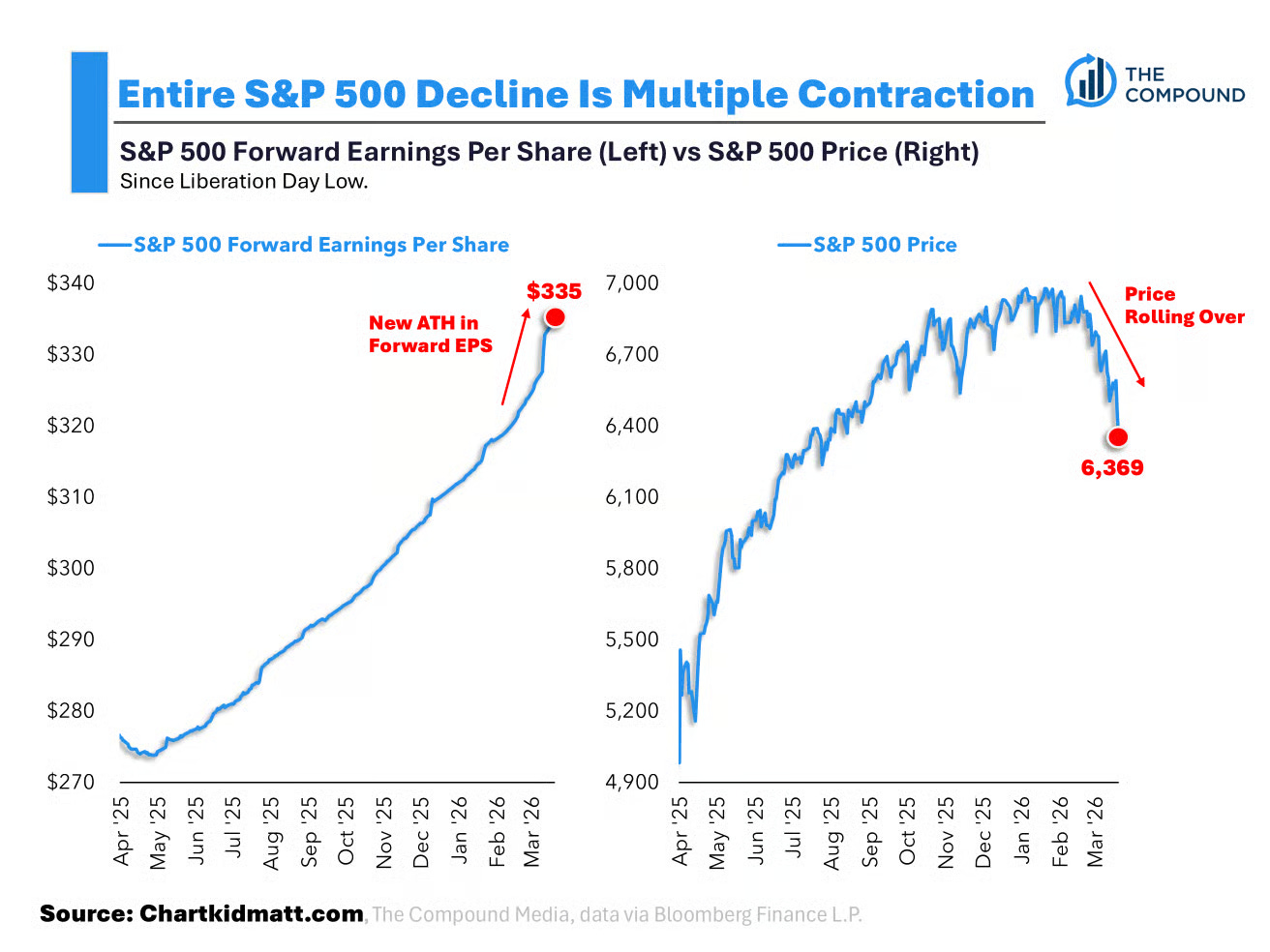
In other words, stocks are getting cheaper while the businesses that make up those stocks remain strong. Let me repeat: stocks are cheaper than before and can be bought at a relative discount!
This isn’t the case for every stock and it’s not an ironclad rule that stocks go up as earnings expectations do, but you can think of earnings as the center of the stock market solar system.
Occasionally the things orbiting earnings cause short term chaos, but they eventually return to their orbit.
So in the process of elimination, it’s safe to say this recent pullback was reason #2.
A war broke out in the Middle East, one we’re directly involved in, and it understandably spooked investors. Between the human toll and oil prices, it caught all of our nervous attention.
This isn’t new territory. Markets have always had to digest the unthinkable. When Russia invaded Ukraine in February 2022, the S&P 500 dropped roughly 10% in the weeks prior as tensions mounted, then quietly bottomed the morning the invasion actually began. The worst imaginable headline hit, and the market shrugged and started climbing. It felt wrong, but it wasn’t.
But then something strange happened. The news got worse, but stocks stopped reacting. The tweets got scarier and stocks yawned. And eventually, stocks stopped reacting altogether. Stocks often bottom when they stop reacting to bad news.
Then this week, we got news of a two week ceasefire and stocks ripped higher.
Shortly thereafter, news of ceasefire violations hit the tape. You’d think stocks would crater on that news, right?
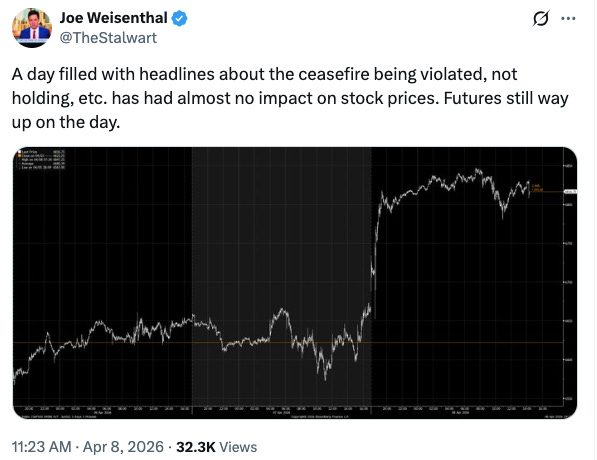
Wrong. And it can feel strange. Expectations are more important than reality
Stocks barely flinched. Why? Because the market had already priced in the chaos. It front-ran the bad news, bottomed on it, and moved on before most people even realized what happened.
This is one of the hardest things to accept as an investor. By the time the news feels scariest, the market has often already done its worst. The headlines catch up to the price action, not the other way around.
There’s actually a name for this phenomenon and it’s called the “wall of worry.” Markets tend to climb it slowly and quietly while everyone’s still arguing about whether it’s safe to invest. The people waiting for the all-clear rarely get a clean signal. By the time things feel comfortable, the opportunity has usually passed.
A study by JP Morgan found that if you missed just the 10 best days in the market over a 20-year period, your returns were cut in half. Most of those best days? They happened within two weeks of the worst days. It’s difficult to process, but it’s a prerequisite for financial success.