Working Harder, Not Smarter
Some thoughts on AI's impact on society

Some of the innovations going on in the world are astounding. It feels like if you blink lately, you might miss something big.
At CES, Nvidia CEO Jensen Huang talked about where we are at in the evolution of AI.
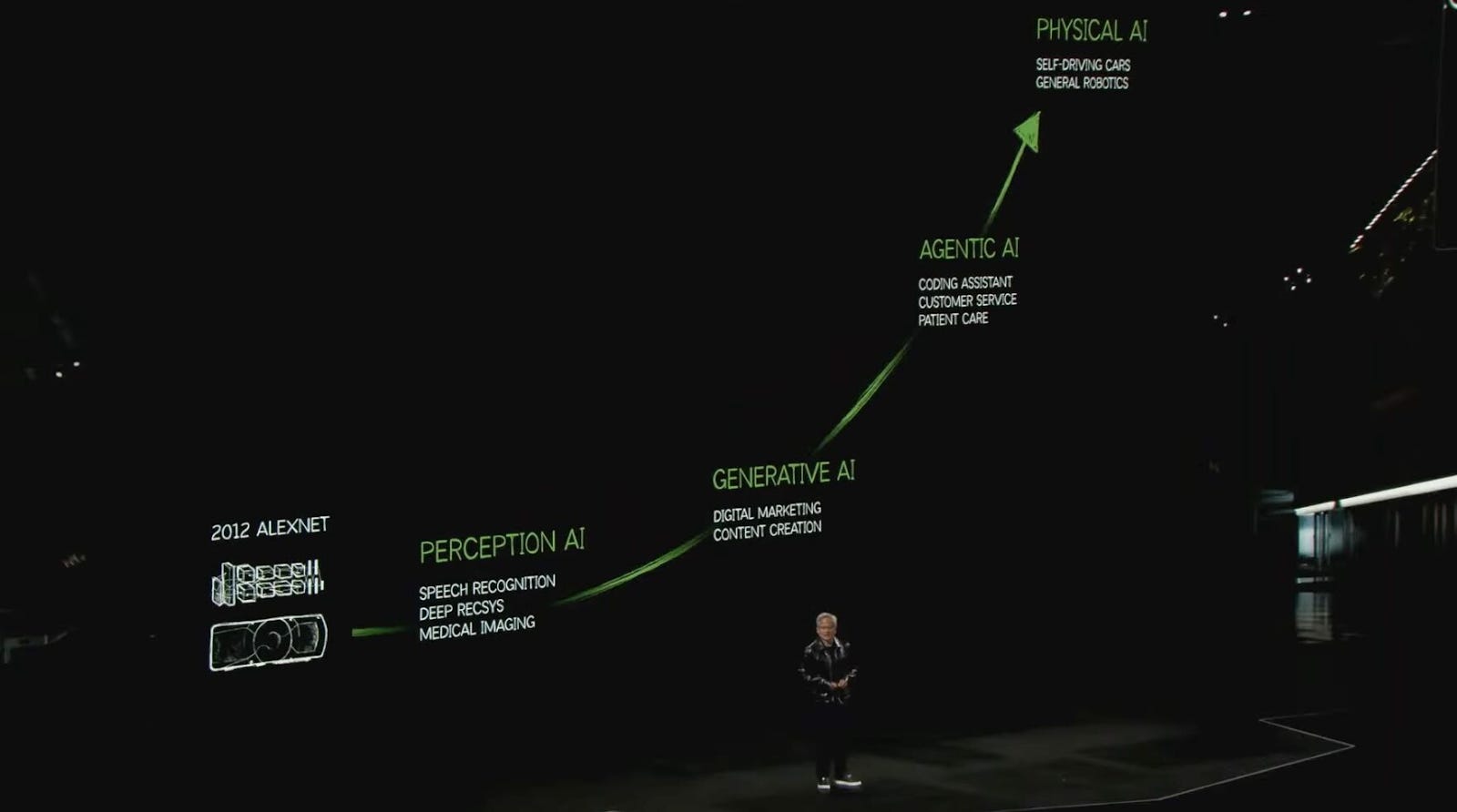
We’re now well past the point of asking Alexa or Siri to change the song or whether a tomato is a fruit or vegetable.
We’re now at the point where ChatGPT can handle reminders and to-do’s, essentially acting as a virtual personal assistant. There are truly some incredible things which can be done, and look no further than the way Patrick O'Shaughnessy is using Claude projects to do everything from journaling to recipe generation to medical history tracking.
And robotics don’t seem to be far behind…
While all of this has the potential for turning us into superhuman productivity machines, there are some things I’m concerned about. And this isn’t some science fiction “takeover of the robots” fear. It’s much simpler than that, and maybe even scarier?
It’s the fact that certain things in life simply cannot have substitutes for doing the actual work. A few examples:
Saving and investing. An AI chatbot or robot cannot teach us how to delay gratification to develop good savings habits. It cannot simulate investing amidst uncertainty or staying invested while facing the fear of a brutal market selloff. I’m sorry, they just can’t.
Forming relationships. The quality of our personal relationships is one of the strongest indicators of happiness, and by all accounts we are becoming more antisocial than ever. We seem to be more digitally connected than ever, but more physically distanced than ever, too. AI seems like the opposite of a course-correction for these trends.
Reading & Writing. You might as well just add “thinking” to this one, too. I totally understand the allure of having AI summarize a book into 10 sentences or having it make an email more concise. But I think we enter a dangerous territory when we decide that outsourcing any and all tedious work is the answer to all of our problems. Sometimes the answer lies within the struggle. Finishing the chapter of a book is a workout for our attention spans. Writing a coherent paper is a workout for our brains to logically connect thoughts together. Skipping these steps for too long will be similar to the muscular atrophy we’d face if we sat on the couch for the rest of time.
Career Progression. Hands down the most productive people I know with AI are also the most productive people I knew before AI. That’s no coincidence. The tools that are available to us can only ever be a complement to the work ethic we’ve already established. I think one of the most misconstrued phrases of the next decade might be “work smarter, not harder”. In reality, you need the latter as a foundation to take full advantage of the former.
Who knows…maybe I’m falling into the short term category of Amara’s Law, where “We tend to overestimate the effect of a technology in the short run and underestimate the effect in the long run.”
Perhaps more than anything, I’m a little weary of AI taking away so many problems that the ones we’re left with we end up making a far bigger deal out of than we actually should. Funny enough, as I was just finishing up this post, I read Morgan Housel’s Minimum Levels of Stress, so I’ll leave you with a few paragraphs which were *chef’s kiss*.
In the absence of big problems, people shift their worries to smaller ones. In the absence of small problems, they focus on petty or even imaginary ones.
Most people – and definitely society as a whole – seem to have a minimum level of stress. They will never be fully at ease because after solving every problem the gaze of their anxiety shifts to the next problem, no matter how trivial it is relative to previous ones.
Free from stressing about where their next meal will come from, worry shifts to, say, a politician being rude. Relieved of the trauma of war, stress shifts to whether someone’s language is offensive, or whether the stock market is overvalued.
Imagine a fictional society that has unlimited wealth, unlimited health, and permanent peace. Would they be overflowing with joy? Probably not. I think their defining characteristic would be how trivial and absurd their grievances would be. They’d be enraged that their maid was 10 minutes late, stressed about whether their lawn was green enough, or despondent that their child didn’t get into Harvard.